
Surfer skincare: how to look after your skin, hair and eyes after surfing
Marina Rezende · 5 min read ·

Sun, salt, hair lightening naturally and that wonderful feeling of spending hours in the sea. We love all of it, right? 🌞🌊
But anyone who surfs often knows that, over the years, all that exposure can leave its mark: sun spots, dry hair, eye problems and even more serious illnesses like skin cancer.
And while sunscreen and moisturising are essential, there are other habits that make all the difference.
We've put together a few tips so you can keep enjoying the best of life in the sea without neglecting your health!

1. How do you protect your skin while surfing?
Your face is one of the areas that suffers most from sun exposure, especially when you spend hours in the water.
Sunscreen every day
Choose a sunscreen with SPF 30 or higher and UVA and UVB protection. If your skin is oily or sensitive, look for matte formulas or ones made for your skin type.
What's the best sunscreen for surfing?
For surfing, go for water-resistant products. Mineral sunscreens, especially ones with ZINC, are the best options, because they also form a "physical" layer of protection. My favourite, which I've used for years, is BLU, a Brazilian sunscreen; the Australian brand Brown Zinc is also great, but hard to find here.

How do you care for your skin from the inside out?
Besides what you put on your skin, there are natural supplements that can help protect it against sun damage and keep dark spots, like melasma, under control.
Two that are part of my routine:
- Oli-Ola: a natural olive extract, rich in antioxidant compounds, studied for its potential to help even out skin tone and control melasma.
- Polypodium leucotomos: an extract from a tropical plant with antioxidant and photoprotective properties, which may help reduce some of the damage caused by UV rays.
But remember: supplements are an extra, not a replacement for sunscreen! It's always a good idea to get professional advice, because everyone is different, right?
Ahhh, and just as important: your lips, neck, hands and ears need protection too. A lip balm with SPF and a good UV-protective top are great allies.
And a tip: looking after your skin now is much easier than trying to repair the damage later.
2. How do you look after your skin after surfing?
After hours of sun, wind and salt water, your skin deserves some extra care.
A simple evening routine already helps a lot:
- Cleanse: remove your sunscreen with micellar water or a suitable cleanser.
- Face wash: wash your face gently to get rid of any residue.
- Moisturise: choose a moisturiser for your skin type.
- Lips: finish with a nourishing balm so they don't dry out.
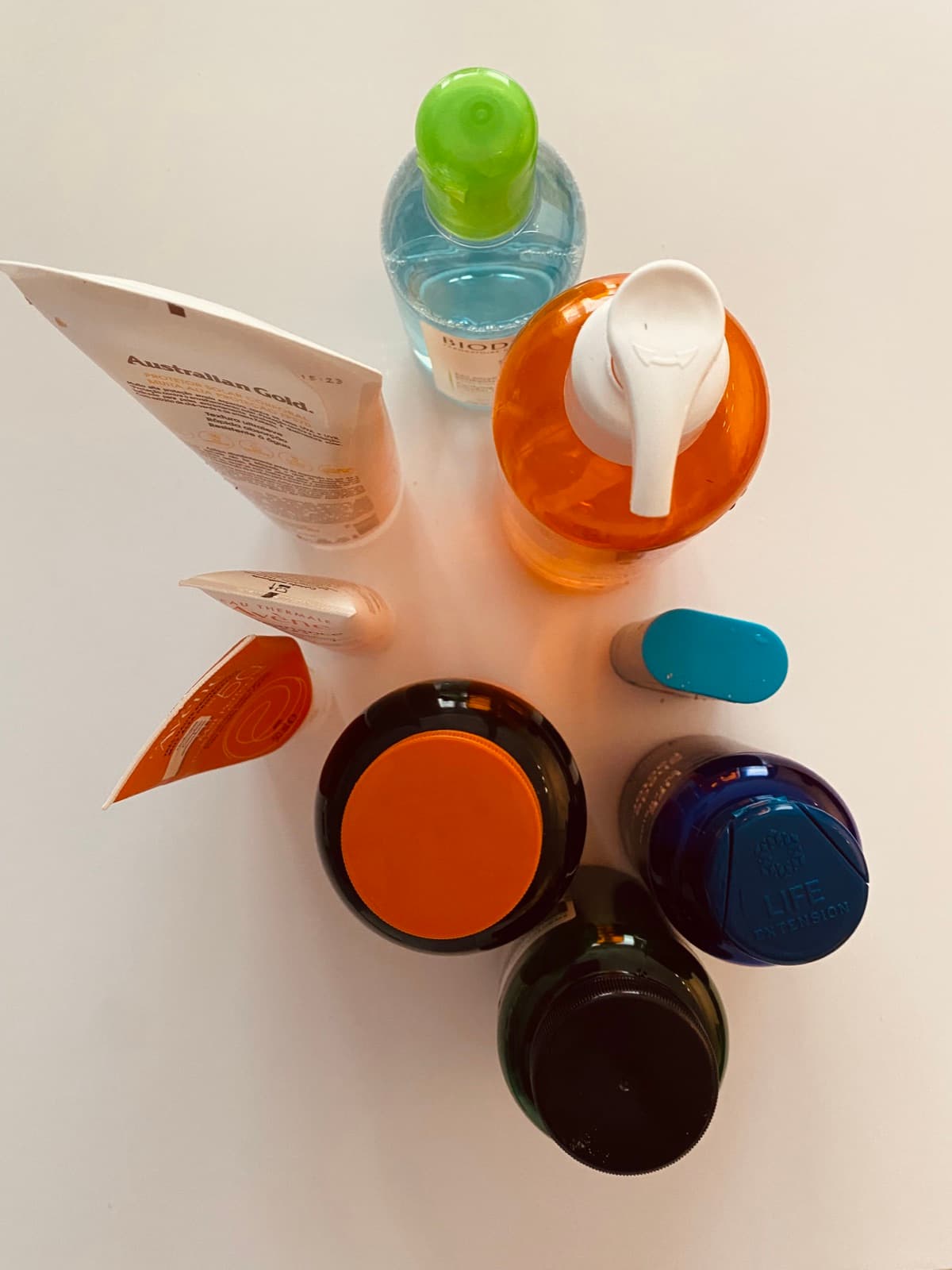
You don't need a thousand products. The secret is consistency!
3. How do you care for hair dried out by the sea?
Ahhh, the famous surfer hair and its 50 gorgeous shades of blonde! But the truth is that, behind that look, your hair can be extremely dry and damaged by the sun and salt.
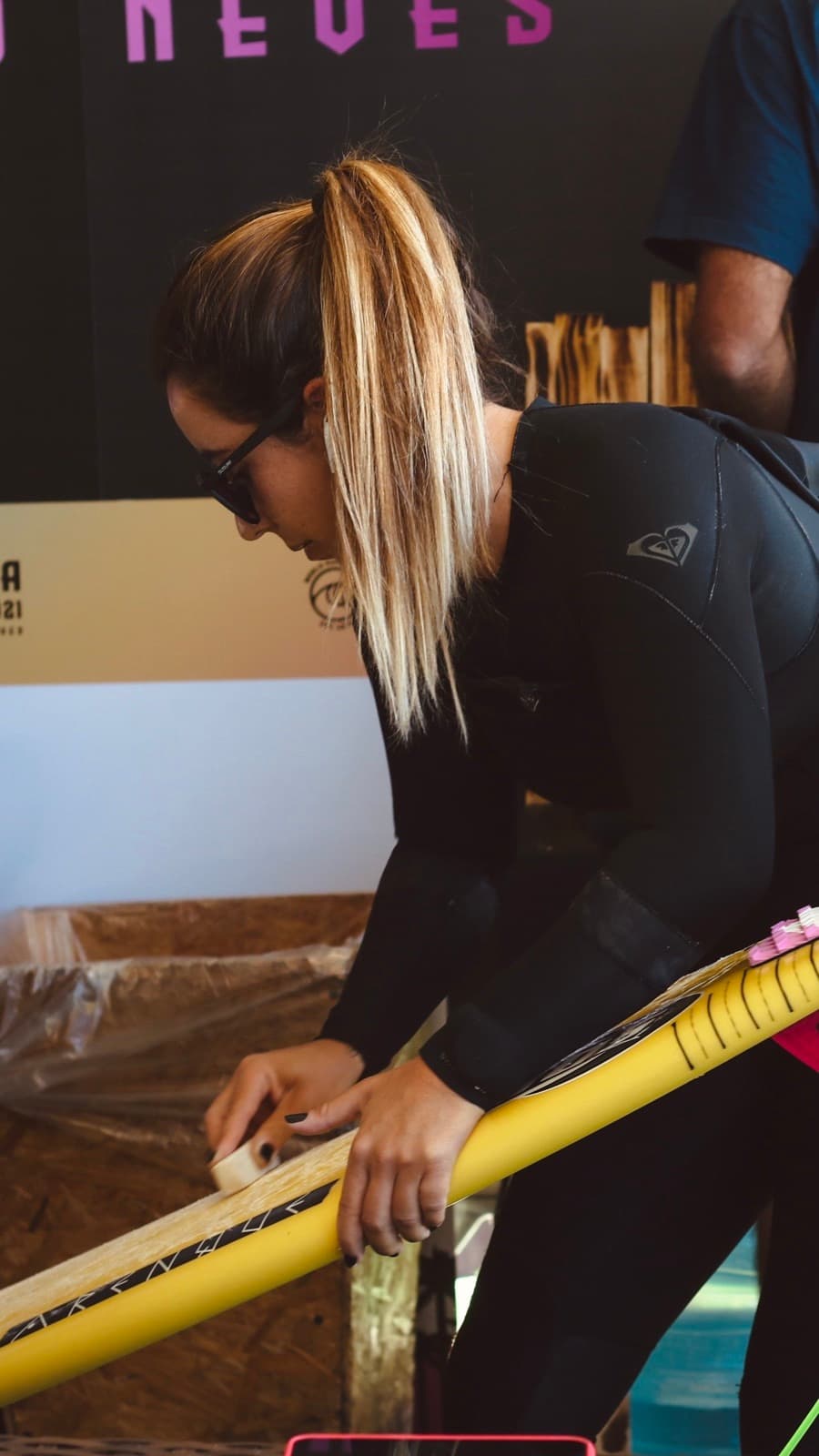
And that old story about surfers putting surf wax in their hair to go blonde? Of course it's a myth! Hehe.
Surfing every day, your hair lightens naturally from the sun. Constant contact with salt water, on the other hand, can dry it out and make it more vulnerable to damage.
It's almost like getting highlights at the salon, except ours happen little by little, over the years!
A few habits make a difference:
- After surfing: whenever you get out of the sea, try to rinse your hair with fresh water to get rid of the excess salt.
- Creams: rinse the salt out before applying products, especially if you're staying on the beach. Don't leave your hair salty for too long!
- Protection: protective creams and oils are highly recommended, but not everyone likes the feeling of product running down their skin and greasy hands before a surf (me, for example!).
- Hydration: a tip I learned from a hairdresser is to use a hair mask instead of conditioner at least three times a week. For anyone who lives in the sea, it makes a difference!

And no, you don't have to give up that beach hair! Just give it some extra attention so you can keep enjoying the beach with healthy hair.
4. How do you protect your eyes from the sun and avoid pterygium?
This is the part a lot of people forget!
If you spend a lot of time in the sea, you need to look after your eyes too. Frequent exposure to UV rays, made stronger by the light reflecting off the water, increases the risk of eye problems.
One of them is pterygium, popularly known as "surfer's eye" (in Brazil, "fisherman's eye"). It's a kind of thin layer of tissue that grows over the surface of the eye and can cause redness, irritation and that feeling of a grain of sand scratching all the time.
So how do you look after them?
The main advice I got from my ophthalmologist was to wear sunglasses whenever possible, a cap for surfing, and to keep my eyes lubricated as directed by a doctor.
In more advanced cases, surgery may be needed.
So give your eyes as much attention as your skin!
5. Surfer skincare: the secret is the routine
Surfing is good for the body, the mind and the soul. And taking care of yourself is part of that relationship with the sea too.
You don't need a complicated routine or a toiletry bag full of expensive products. Small habits, repeated every day, make a huge difference over the years.
And that's it for today, hehe! I hope these tips help you make the most of beach life, and even better, without paying for it later! 💗
See you in the line-up!
Surf Like a Girl Team
This article shares personal experience and general care tips. It doesn't replace advice from dermatologists, ophthalmologists or other health professionals.

Marina Rezende
Professional surfer with more than 10 years on the WSL, founder and head coach of Surf Like a Girl Team.