
From competition to free surfing: what I learned as a pro surfer
Marina Rezende · 5 min read · First published , updated
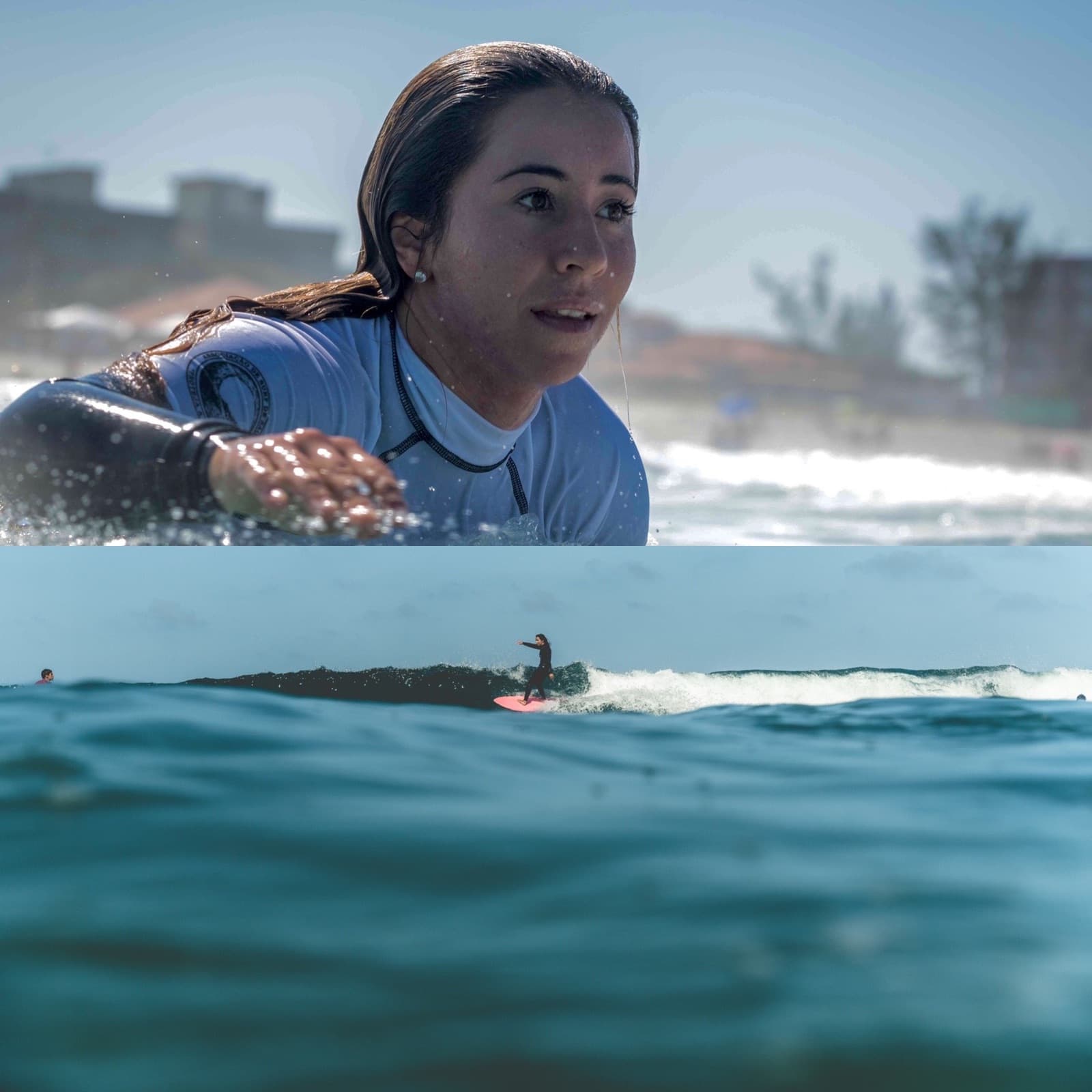
After years of traveling around the world, pressure, training, results, sponsors, packing, unpacking, carrying a board bag back and forth, hard situations, and an individual and sometimes lonely life, I realized that my passion for surfing wasn't in disputing my level with other girls. My happiness was found in enjoying a good surf session, expressing myself and my personality, drawing on the lines of the ocean in an almost perfectly rehearsed synchrony with this unpredictable force of nature.
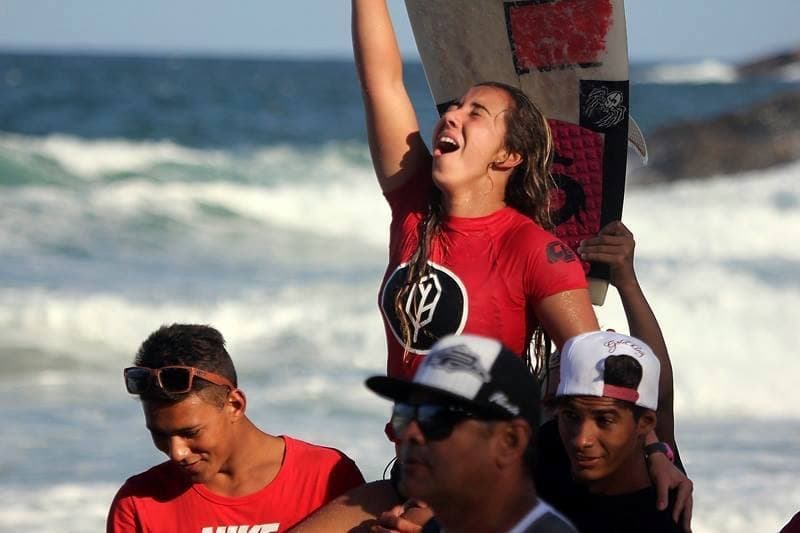
“I realized that my passion for surfing wasn't in disputing my level with other girls…”
How surfing and competing came into my life
So, going back in time… My parents say that I always had an inexplicable attraction to the sea. As soon as I learned to walk, I would run straight into the water countless times, until one day my father let me go alone to “take a fright” and see if I would stop. Did it work? No…
I grew up on the beach watching my father in the water, and as soon as I understood myself as “human”, I just wanted to do the same. As my father was a swimming coach, I think the sense of competition was already inside me, and 2 years later I was already in a competition. And at that moment, after the ecstasy of being a champion for the first time in my life, at 8 years old, I decided on my future and what my profession would be kkkkk it sounds comical, but it's true!
It was never forced. I think my deepest desire and biggest goal at that time was to surf better than my father (objective successfully completed lol).
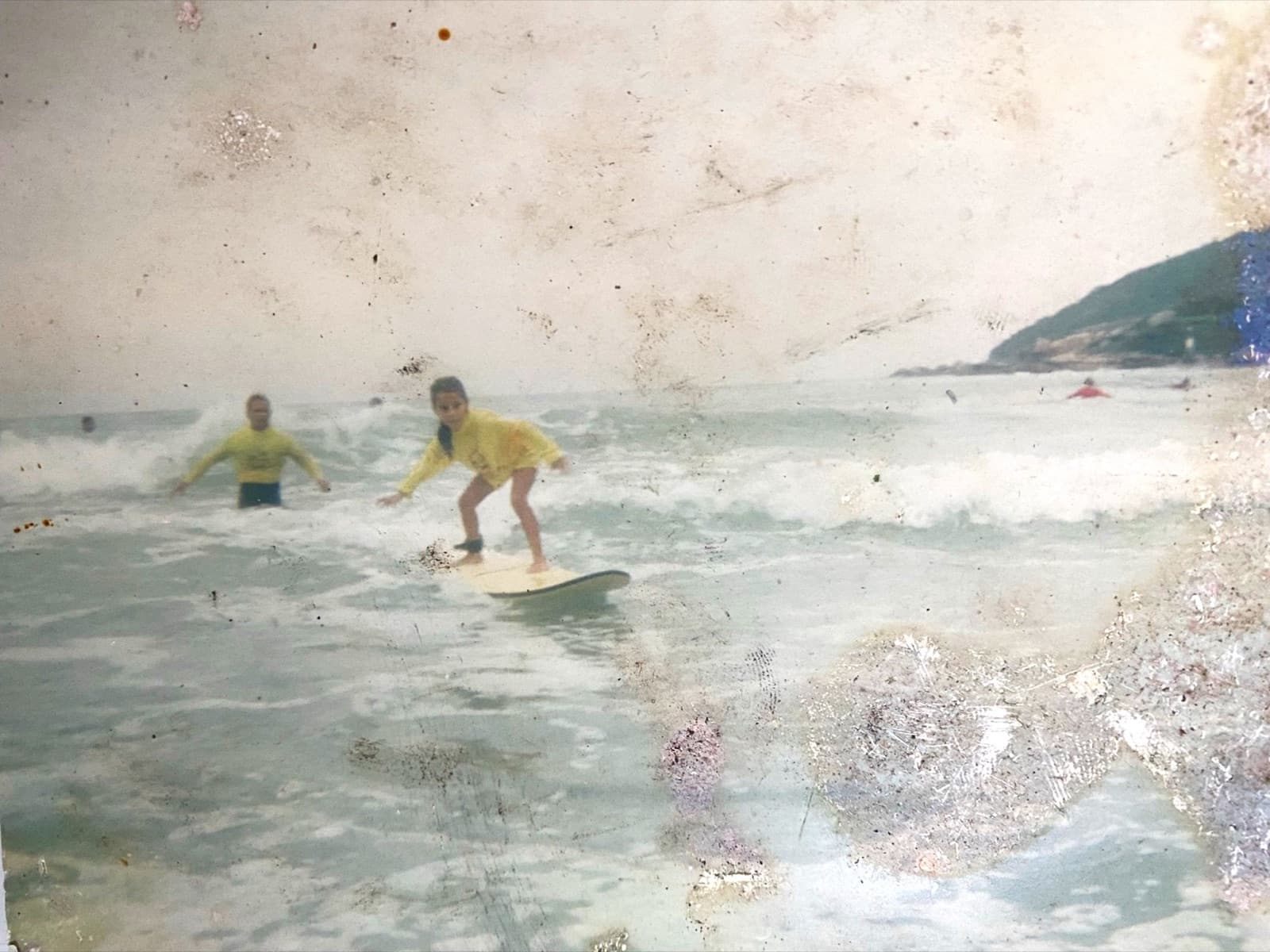
“At the age of 8, I decided on my future and what my profession would be kkkkk it sounds comical, but it's true…”
Life as a professional surfer
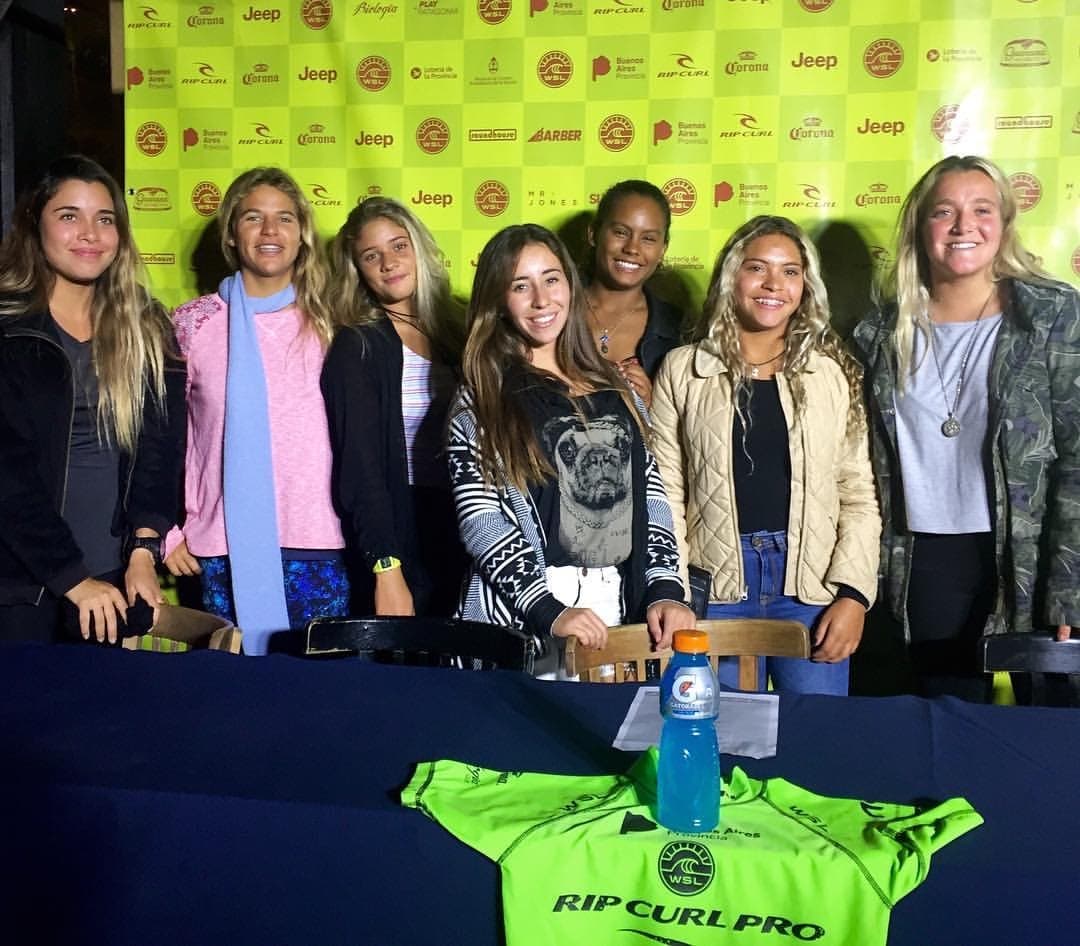
I can say my life really revolved around surfing and competitions from the age of 14, when I started to be on the road at least twice a month: state, national and South American competitions. It stayed like that for a few years.
After a solid career, often among the top 5 in the national and South American circuits, at 22 I started to not feel so happy with “this life” and all I had known until then… I felt it lacked depth, lacked connection, lacked meaning. Suddenly life became waking up early, training until dark, eating well, physiotherapy, psychologist, nutritionist, hotel rooms, championships, time to show everything I trained for, crying, back home, training more, next championship… A lot of discipline, distance from family, few true relationships, lots of fun, lots of facilities, but little depth... Suddenly none of that made sense to me... Going into the sea to do what I love and coming out stressed because I couldn't make that section or that maneuver began to get heavy.
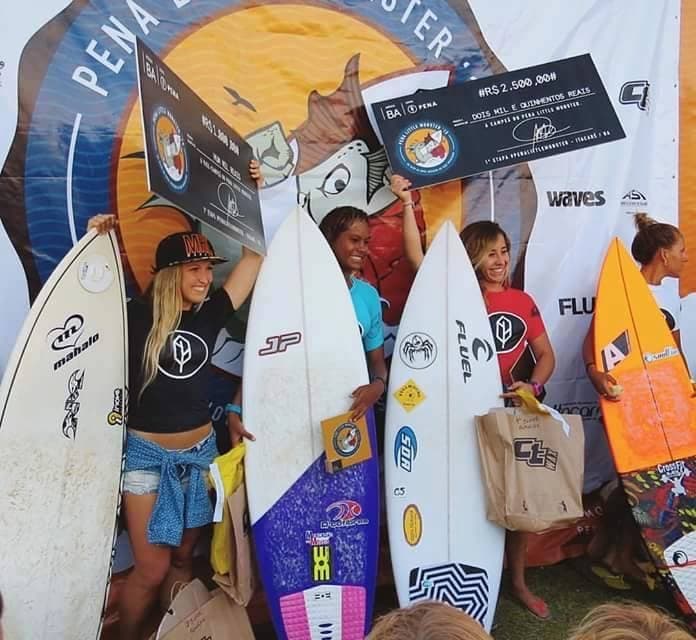
“Suddenly life became waking up early, training until dark, eating well, physiotherapy, psychologist, nutritionist, hotel rooms…”
When competing stopped making sense
Then the doubt began: if I'm doing what I love most (surfing), why am I finishing the session stressed? “Something wrong isn't right” around here.
So there were 3 years of uncertainty. As an athlete, it's clear that if you want to be the best in the world, you have to want it more than anyone else and your life has to revolve 100% around it, so doubt is probably not the best fuel for an athlete.
The decision to stop competing
It was 2022, after the pandemic had messed with everyone's heads, locked inside the house. I made the hardest decision of my life: I'm going to stop competing, leave my sponsor and start over in another country, far away from here. In a way an escape, in another way the best choice I ever made.
It only took me a little while to realize that I loved going surfing with friends without any pressure. It took me a little time to realize that the sessions I didn't surf well were also fun. It didn't take long to feel happy that my finances no longer depended on my surfing, and that created a lightness; it took a weight off my shoulders. Honestly, nowadays I think that mixing our sport, our passion, with “money” doesn't always work: it often stops being a pleasure and becomes an obligation.
What the sport taught me
I can say there were many victories, many defeats, and millions of lessons that only sport gives us: discipline, persistence, keeping calm under pressure, dealing with fear and anxiety, long and short-term goals, among many other essentials for a balanced life.
Today I'm certain that the ocean and sport were my greatest teachers in life. They built the person I am today, and the only certainty I have in life now is that I want to do this for as long as my body can handle it. But free, light and loose, or, as some people call it, a “free surfer”.
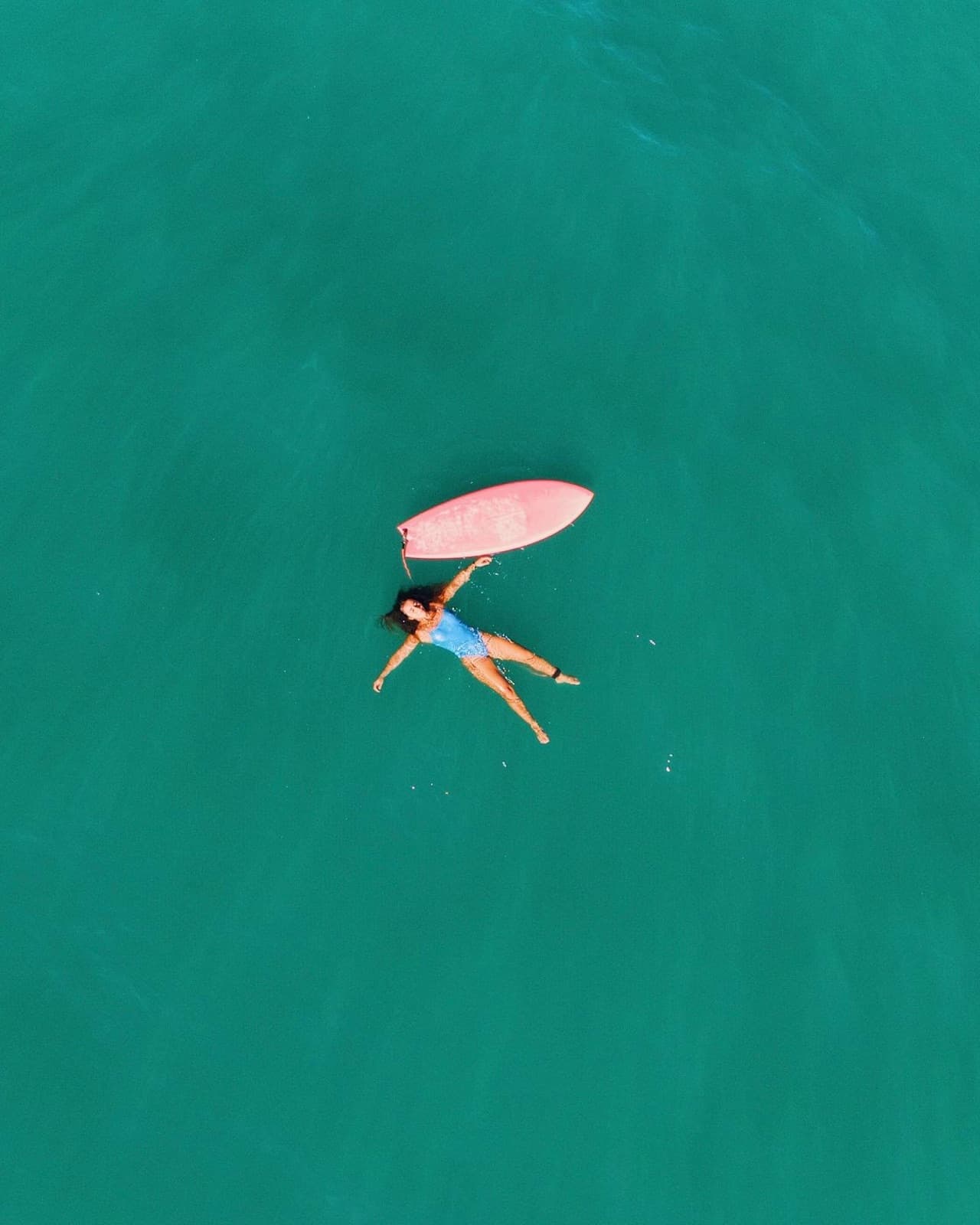
“I want to do this for as long as my body can handle it. But free, light and loose, or, as some people call it, a “free surfer”.”
For athletes, parents and the next generation
I think it was important to write about this because the transition from professional to free surfing is a psychological game in which I've seen so many athletes get lost, and so many friends going through this painful change. I wanted them to know more about it, to talk more about it, and for the subject to get more attention. Also for the little ones, the new generation already starting to surf to become world champions, or for the parents who push this future onto their children to give them the opportunity they didn't have…
I think competition is one of life's greatest teachers. But let it be clear that being an athlete is one part of our life, just one gear in the engine of life. The problem is that we forget we are much more than winning championships, and that has caused many athletes years of depression. A successful career is beautiful, but even more beautiful is having a good foundation and people we love around us. And sometimes we have to accept that an 8-year-old's dream no longer matches the goals of an adult, and it's okay not to make childhood dreams come true, because dreams change throughout life. That's not a sign of weakness or giving up, but a sign of maturity and discernment. When athletes think life is over when their career ends, in fact, it's only the beginning.
How this became Surf Like a Girl
For more than 15 years, Marina lived surfing as a professional athlete, competing, travelling and building her life around her own performance, until she realised there was an important piece missing from that journey: sharing.
What began with no big plan, just helping other people progress in their surfing, took on purpose, study and methodology. That's how Surf Like a Girl was born: surf training made for women, combining an athlete's experience with the principles of learning and development, alongside something that has always been part of the best memories in surfing: sharing the line-up with your crew.
Marina Rezende
Professional surfer with more than 10 years on the WSL, founder and head coach of Surf Like a Girl Team.